Is a Lion Cut Right for Your Cat? Benefits, Process, and Aftercare
Have you found another mat behind your cat's ears? Or under their legs, or a clump on their belly that your cat won't let you near? If you live with a Maine Coon, Persian, Ragdoll, or any other fluffy cat, you know how quickly a beautiful coat can turn into a tangled mess. Tight mats pull on the skin with every step. Brushing them out at home often ends with an unhappy cat and a frustrated owner.
For many cats, a lion cut is a fresh start. It removes the mats at once, gives the coat a clean slate, and gets your cat comfortable again.
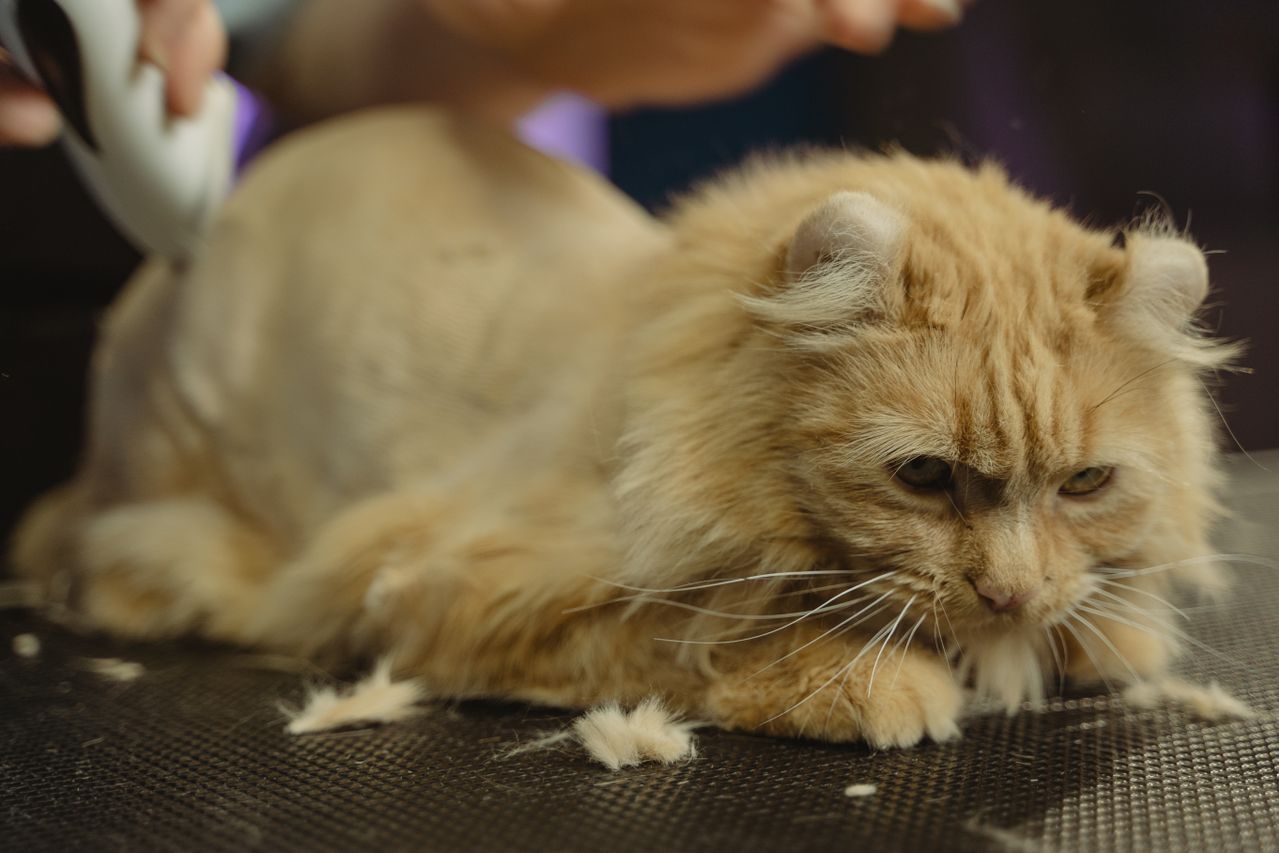
In a lion cut, most of the body fur is trimmed short. A mane is left around the head, along with a plume at the tip of the tail and sometimes small tufts at the feet. It's a charming look, but its main purpose is practical. Below, we explain who benefits most from a lion cut, what happens during the appointment, and how to keep your cat comfortable afterward.
Which Cats Benefit Most From a Lion Cut?
Not every cat needs a lion cut. Short-haired cats usually do fine with regular brushing. A lion cut is most helpful for cats whose coats have become hard to manage, including:
- Long-haired breeds such as Maine Coons, Persians, Himalayans, and Ragdolls, whose dense undercoats mat easily
- Senior cats that no longer groom as thoroughly as they used to
- Overweight cats or cats with limited mobility that can't reach their backs or hindquarters
- Cats with widespread matting that would be painful to brush or comb out
- Heavy shedders whose families are tired of fur on every surface and frequent hairballs
If your cat has only one or two small tangles, a cat brushout may be enough. If the matting is extensive, a lion cut is often the kinder option, because working out dozens of tight mats one by one can be stressful and painful.
The Benefits of a Lion Cut
Relief From Matting
Mats aren't just a cosmetic problem. Tight mats trap moisture and debris against the skin and can lead to irritation, sores, and hot spots. Removing the matted coat relieves that pressure right away, and many owners notice their cat moving more freely afterward.
Less Shedding and Fewer Hairballs
With a shorter coat, your cat swallows less loose hair while self-grooming. That often means fewer hairballs and less fur on your couch, bedding, and clothes.
Easier Hygiene
Long fur around the hindquarters can collect litter and waste. A lion cut keeps those areas tidy and makes it easier for your cat to stay clean. For cats that need help only in that area, a cat sanitary trim is a smaller alternative.
A Chance to Spot Skin Concerns
With the coat short, it's much easier to notice lumps, bumps, flaky skin, or redness that a thick coat might hide. If we see anything unusual during the groom, we'll let you know so you can follow up with your veterinarian.
What Happens During a Lion Cut Appointment
At Dogs Applaws, cat grooming is always one-on-one and at your cat's pace. A typical lion cut includes:
- Consultation. We ask about your cat's age, health, temperament, and grooming history, then look over the coat and skin.
- Calm, gentle handling. Your cat is never rushed or left unattended. If your cat needs a break, we take one.
- Careful clipping. We use professional clippers to trim the body coat short, paying close attention to thin skin around the armpits, belly, and legs.
- Shaping the mane and tail. We tidy the mane and shape the tail plume and leg tufts for that classic lion look.
- Final check. We brush out the remaining coat, check the skin, and share aftercare tips with you at pickup.
Most appointments are finished in about two hours or less. In-salon lion cuts are $135–$155, and mobile lion cuts are $185. Final pricing depends on your cat's size, coat, and condition. See our cat lion cut service page for details.
Lion Cut Aftercare Tips
Most cats adjust to their new look within a day or two. These tips help with the transition:
- Keep your cat warm. A freshly clipped cat loses its insulation, so offer a cozy blanket or a warm spot to nap, especially in the cooler Maine months.
- Keep indoor cats indoors. Shorter fur offers less protection from cold and sun.
- Give your cat some space. Some cats act a little unusual right after a big coat change. This is normal and usually passes quickly.
- Watch the skin. Mild pinkness can happen on sensitive areas. If you notice redness, swelling, or constant licking that doesn't settle, contact your veterinarian.
- Start brushing as the coat grows back. Short, gentle brushing sessions a few times a week help keep new mats from forming.
How Often Should Your Cat Get a Lion Cut?
Most cats that do well with lion cuts return every two to four months, depending on how quickly their coat grows and how much they mat. Some families book a lion cut every spring to keep their cat comfortable through the warmer months and let the coat grow back for winter. Others prefer a regular schedule year-round. We're happy to recommend a timeline at your cat's appointment.
Is a Lion Cut Safe for Every Cat?
For most healthy cats, a lion cut performed by an experienced groomer is safe and well tolerated. Cats with serious health concerns, heart conditions, or extreme handling stress may need input from their veterinarian first. If you're unsure, give us a call and we'll talk through the best option for your cat.
Give Your Cat a Fresh Start
If mats, shedding, or hairballs are making your cat uncomfortable, a lion cut can bring relief in a single visit. Every lion cut at Dogs Applaws is one-on-one, unhurried, and adjusted to your cat's temperament.
Prefer to talk it through? Call (207) 475-8714. You can also visit us at 22 Litchfield Rd, Kittery, ME 03904, near the White Church. We are open Tuesday through Saturday, 9 AM to 6 PM, and serve Kittery, York, Portsmouth, and nearby towns.