
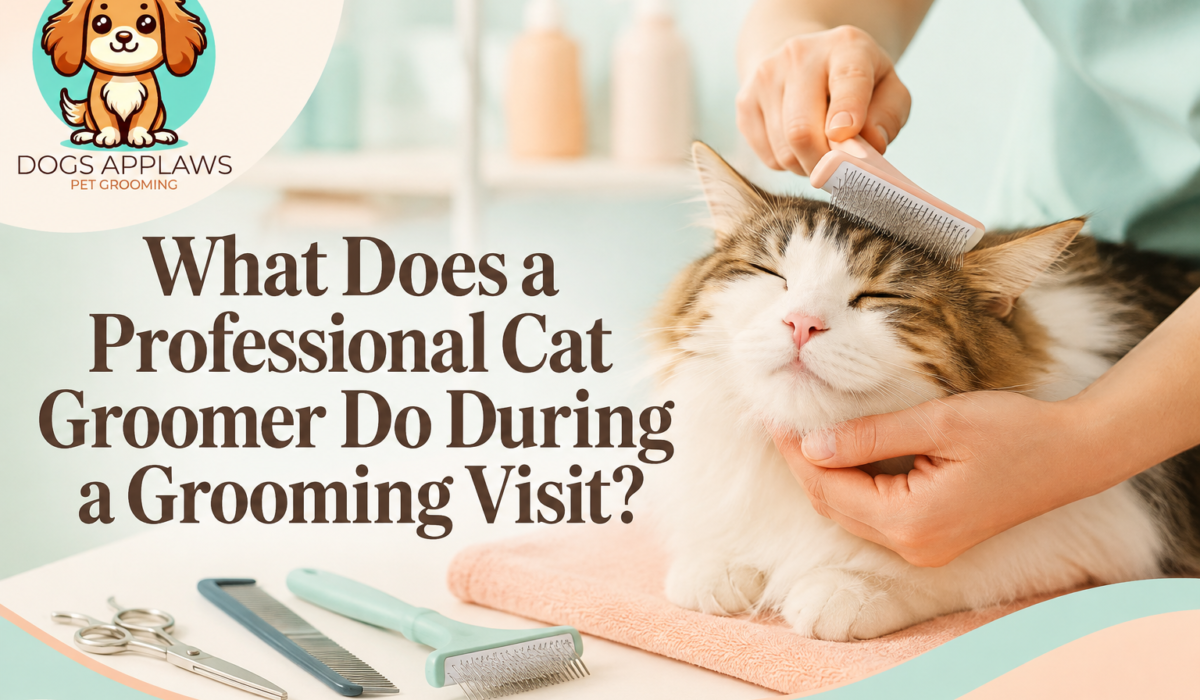
What Does a Professional Cat Groomer Do During a Grooming Visit?
Cats are famous for keeping themselves clean. They lick their coats, wash their paws, and somehow manage to look polished even after spending the afternoon sleeping in the strangest places. Still, self-grooming does not always cover every need. Long-haired cats can develop painful mats, older cats may struggle to reach certain areas, and some cats simply need help with nails, loose fur, or hygiene.
That is where a professional cat groomer can make a real difference. A grooming visit isn’t just about making a cat look cute. It involves careful handling, coat care, cleaning, trimming, observation, and plenty of patience. Because cats can become stressed quickly, professional cat grooming requires a different approach from ordinary dog grooming. A skilled groomer watches body language and adjusts the process to the individual cat.
So, what actually happens once your cat arrives for an appointment? From the first conversation to the final brush, each step has a purpose. Understanding the process can help you feel more confident about booking a cat grooming appointment and help your cat have a safer, calmer experience.
1. The Visit Starts With a Careful Cat Assessment
Before the grooming begins, a good cat groomer should take time to understand the cat. This may include asking about the cat’s age, coat type, grooming history, temperament, and any problems the owner has noticed at home. For example, a cat that becomes nervous around strangers may need a slower introduction than a confident cat that enjoys being handled.
The groomer also looks at the coat and skin before choosing the best approach. They may notice tangles, mats, excessive shedding, dirt, dry skin, or areas that need extra attention. This first assessment helps the groomer decide what can safely be completed during the appointment.
A professional may also consider:
- The cat’s coat length and texture
- Previous grooming experiences
- Sensitivity around certain body areas
- Existing mats or tangles
- Nail length and condition
- General comfort during handling
- The cat’s stress signals
This step matters because every cat is different. A grooming plan that works beautifully for one cat may not be appropriate for another.
2. Gentle Handling Helps the Cat Feel More Comfortable
Cats do not always walk into a grooming environment thinking, “Great, it’s spa day!” Some are curious, while others may immediately look for an escape route. That is why professional handling is one of the most important parts of the visit.
An experienced cat groomer watches the cat’s behavior throughout the appointment. A stiff body, flattened ears, rapid movements, vocalization, or attempts to escape can indicate that the cat needs a pause or a change in approach. Rather than forcing the process, a thoughtful groomer works at the cat’s pace whenever possible.
The goal is not simply to finish the appointment. The goal is to provide necessary care without creating unnecessary fear. Quiet handling, short breaks, secure positioning, and a calm environment can make the experience much easier for a nervous cat. Hill also notes that cats can benefit from professional grooming when they have difficult coats, are anxious about handling, or need help with grooming tasks.
3. Brushing Removes Loose Fur, Tangles, and Debris
Once the cat is comfortable enough to continue, brushing is usually an important part of the process. The groomer selects tools based on the cat’s coat. Long, dense, or curly coats may require more careful combing, while short-haired cats often need a simpler brushing routine.
Brushing removes loose hair and helps separate small tangles before they become larger mats. It can also remove dirt and debris trapped in the coat. Regular brushing at home can help maintain the results between professional appointments. Hill’s recommends regular brushing because it can help remove loose hair, reduce tangles, and reduce hairballs.
However, brushing a cat is not always as simple as running a brush through the fur. The groomer must be careful around sensitive areas such as the belly, legs, tail, and behind the ears. Pulling too hard on a tangled coat can hurt the cat and may make future grooming more difficult.
4. Mat Removal Requires Patience and the Right Technique
Mats are one of the most common reasons cat owners seek professional help. They often develop in long-haired cats, particularly around areas that experience movement or friction. Behind the ears, under the legs, around the neck, and near the rear can be especially troublesome.
A professional cat grooming appointment gives the groomer a chance to assess whether a mat can be safely worked out or whether clipping is the better option. Severe mats can become tight against the skin, making removal uncomfortable and increasing the risk of injury if someone tries to cut them out at home with scissors.
Hill advises consulting a professional when a cat’s coat is severely matted and warns against using scissors because cat skin is very thin and can be accidentally cut.
A responsible groomer also knows that finishing every cosmetic detail is not worth overwhelming a cat. If the coat is severely tangled or the cat becomes too stressed, the groomer may recommend a shorter, safer grooming plan instead.
5. Bathing and Drying Are Done With Extra Care
Not every cat needs a bath during every grooming visit. However, depending on the cat’s coat, condition, hygiene needs, and the services selected, bathing may be part of professional cat grooming.
Cats can react strongly to water, unfamiliar smells, and loud equipment. Therefore, the bathing process should be calm and controlled. A groomer uses products appropriate for cats and takes care to avoid sensitive areas such as the eyes and ears.
Drying is equally important. A wet cat can become uncomfortable quickly, so the groomer needs to choose a drying method that balances coat care with the cat’s tolerance. Some cats may handle certain drying techniques well, while others may become very anxious around loud dryers.
A thoughtful grooming visit may therefore include:
- Coat preparation before the bath
- Cat-appropriate cleansing products
- Careful rinsing
- Gentle towel drying
- Controlled drying based on the cat’s comfort
- Final brushing after the coat is dry
The exact process can vary from one cat grooming salon to another, so it is reasonable to ask what bathing and drying methods are used before booking.
6. Nail Trimming, Ear Care, and Hygiene Get Attention
A grooming appointment can also take care of smaller maintenance tasks that are easy to overlook at home. Nail trimming is one example. Overgrown claws can become uncomfortable and may catch on fabric or other surfaces.
A groomer may also clean the outer parts of the ears when appropriate and check for visible dirt or unusual buildup. This does not replace veterinary care. If the groomer notices something that looks concerning, such as significant discharge, inflammation, or an unusual skin issue, a veterinarian may be the right person to evaluate it.
Sanitary grooming may also be helpful for certain cats, especially those with long coats that collect debris around the rear. The goal is practical cleanliness rather than unnecessary styling.
Professional grooming can therefore provide both cosmetic and maintenance benefits. Hydrant Pet Center, for example, describes professional cat grooming as potentially including mat removal, coat maintenance, nail trimming, ear cleaning, sanitary trims, and observation of the skin and coat.
7. The Groomer Watches for Coat and Skin Changes
One of the less obvious benefits of a grooming visit is that the groomer gets a close look at areas that owners may not easily see. While a groomer cannot diagnose medical conditions, they may notice something that deserves attention.
For example, a groomer might see an unusual lump, irritated patch, excessive dandruff, parasites, or a change in the coat. That does not mean the groomer can determine the cause. Instead, they can let the owner know what they observed and recommend discussing it with a veterinarian.
This close observation is particularly useful for cats with thick or long coats. Fur can hide small changes that are difficult to notice during everyday petting. Hill notes that grooming can provide an opportunity to identify skin irritation, lumps, and other coat or skin irregularities.
That is one reason a grooming appointment should be viewed as part of responsible pet care rather than simply a beauty treatment.
8. The Final Steps Focus on Comfort and Aftercare
After the main grooming work is complete, the groomer checks the overall result. The coat may receive a final brush or comb, loose hair may be removed, and the groomer may make sure the nails and requested hygiene areas have been addressed.
Just as importantly, the groomer should communicate with the owner. You may learn that your cat had a particularly stubborn mat, became uncomfortable with a certain part of the process, or would benefit from more frequent brushing at home.
A useful post-grooming conversation may cover:
- What services were completed
- Any areas that were difficult to groom
- Coat or skin observations
- Recommended brushing frequency
- When the next appointment may be useful
- Ways to make future visits easier
This feedback helps you continue the grooming routine at home. It also gives the groomer useful information for future appointments. Over time, regular visits can help a cat become more familiar with the process.
How Much Does Professional Cat Grooming Cost?
One common question is, “How much will this cost?” Unfortunately, there is no single cat grooming price that applies everywhere. The cat grooming cost can vary based on location, coat condition, coat length, services requested, grooming time, and how much mat removal is necessary.
For example, a simple nail trim will generally involve less work than a full groom for a long-haired cat with significant matting. A nervous cat may also require more time and patience than an easygoing cat.
When comparing cat grooming prices, do not look only at the cheapest number. Ask what the quoted price includes. A professional cat grooming appointment may involve brushing, bathing, drying, nail care, mat removal, sanitary trimming, and other services depending on the groomer and your cat’s needs.
If you are considering grooming services for your cat, you can explore the cat grooming information available through Dogs Applaws and learn more about the broader pet care services offered by Dogs Applaws.
Cat Grooming Salon or Mobile Cat Groomer: Which Is Better?
Both options can work well. A traditional cat grooming salon gives you access to a dedicated grooming environment with professional equipment. For some cats, however, traveling to an unfamiliar place can be the hardest part of the entire experience.
A mobile cat groomer may bring grooming services closer to the cat’s familiar surroundings. This can be appealing for cats that become especially nervous during car rides or unfamiliar environments. Hill’s also highlights mobile grooming as an option for anxious cats because grooming can take place in a more familiar setting.
When choosing between the two, think about your cat rather than simply choosing what sounds most convenient. Consider:
- Does your cat panic during car rides?
- Does your cat become overwhelmed in unfamiliar places?
- Does your cat handle new people well?
- Is a quiet grooming environment important?
- What services does each provider offer?
- How does each groomer handle stressed cats?
- What are the total cat grooming prices?
The best choice is the one that provides safe, appropriate care while keeping your cat as comfortable as possible.
How Can You Prepare Your Cat for a Grooming Appointment?
Preparation can make a surprising difference. If your cat is not used to being handled, start with short, calm sessions at home. Touch the paws gently, brush for a short time, and reward calm behavior. Do not turn every session into a battle.
It is also helpful to make the carrier a familiar place instead of bringing it out only when something unpleasant is about to happen. A comfortable carrier, familiar blanket, and calm routine can make travel easier.
On appointment day, avoid making the entire event feel dramatic. Cats often notice changes in your behavior. Stay calm, follow the groomer’s instructions, and share important information about your cat’s temperament and grooming history.
For ongoing in-home pet care, you can also explore Dogs Applaws’ cat sitting services to learn about another approach to personalized care at home.
How Often Should a Cat See a Professional Groomer?
There is no universal grooming schedule for every cat. A short-haired cat that maintains a healthy coat may need less professional grooming than a long-haired cat that mats easily. Age, coat type, lifestyle, health, and the amount of brushing done at home can all affect the ideal schedule.
Hill explains that cats with regular home brushing may only need professional grooming periodically, while nail maintenance can be needed more frequently. The important thing is to create a routine based on the individual cat rather than following a rigid calendar.
Long-haired cats often benefit from more frequent attention because their coats can tangle quickly. Senior cats may also need extra help because flexibility and mobility can change with age. Overweight cats can have difficulty reaching certain areas, making professional assistance useful as well.
If you are unsure about the right schedule, ask a qualified groomer to assess your cat’s coat and recommend a practical maintenance routine.
Final Thoughts
A professional cat groomer does much more than brush fur and trim nails. A good grooming visit combines careful assessment, gentle handling, coat maintenance, hygiene care, and close attention to the cat’s comfort. The process may include brushing, mat removal, bathing, drying, nail trimming, ear care, sanitary grooming, and a final coat check.
Most importantly, professional grooming should never be treated as a race to finish as quickly as possible. Cats have individual personalities and different tolerance levels. The best approach is patient, flexible, and focused on safety.
If your cat has a difficult coat, frequent mats, excessive shedding, overgrown nails, or simply needs extra grooming support, professional help may make life easier for both of you. Start by asking questions, understanding the services offered, and choosing a cat groomer who treats feline comfort as a priority.
Your cat does not need to love every minute of grooming. But with the right preparation and a calm professional approach, grooming can become a much more manageable part of your cat’s regular care routine.
FAQs About Professional Cat Grooming
1. What does a professional cat groomer do?
A professional cat groomer may brush and comb the coat, remove mats, bathe and dry the cat, trim nails, provide appropriate hygiene care, and check the coat and skin for noticeable concerns. Services vary by groomer and the cat’s needs.
2. Do all cats need professional grooming?
No. Many cats can maintain much of their coat through normal self-grooming and regular brushing at home. However, long-haired, senior, overweight, heavily shedding, or mat-prone cats may benefit more from professional grooming.
3. How long does a cat grooming appointment take?
The time varies. A simple maintenance appointment may be relatively quick, while a full groom involving bathing, drying, brushing, and mat removal can take considerably longer. The cat’s temperament also affects the timing.
4. How much does cat grooming cost?
Cat grooming cost varies by location, coat condition, services, grooming time, and the amount of matting or special care involved. Ask the groomer for a price estimate and confirm what is included before the appointment.
5. Is professional cat grooming safe?
Professional grooming can be safe when performed by an experienced groomer who understands feline behavior, uses appropriate equipment, and prioritizes the cat’s comfort. Cats have delicate skin and can become stressed quickly, so cat-specific experience matters.